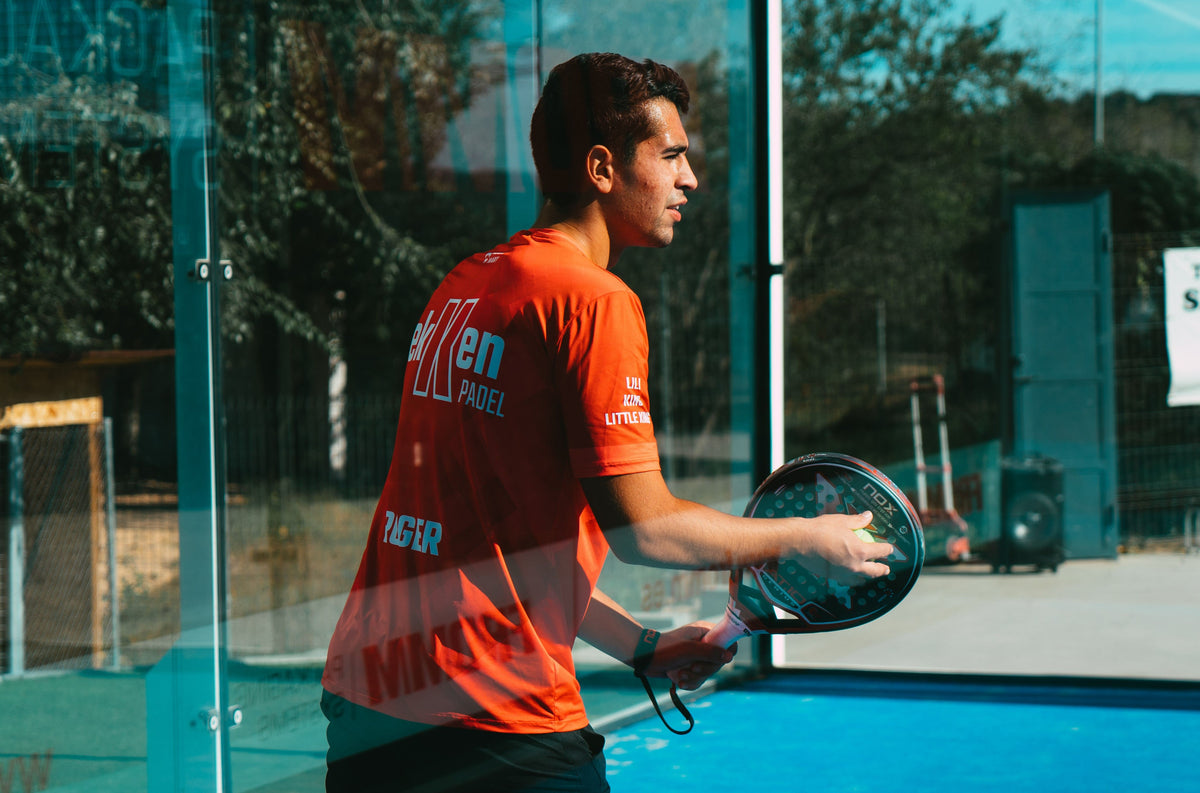
Article: What Is Padel? The Complete Beginner's Guide

What Is Padel? The Complete Beginner's Guide
What is padel? Padel is a fast, social racket sport, usually played in doubles, on an enclosed court about a third smaller than a tennis court. You hit a low-bounce ball with a solid, perforated racket, and the glass walls around the court are part of the game, much like in squash. The scoring will feel familiar to anyone who has watched tennis.
Padel has grown faster in Britain than almost any other sport in recent years, largely because beginners can enjoy a proper rally in their very first session. This guide explains how the sport works, from the court and the rules to scoring, equipment, costs and how to book your first game in the UK.
What Is Padel?
Padel is a racket sport that blends elements of tennis and squash. Like tennis, there is a net across the middle and you score with 15, 30, 40 and game. Like squash, the court is fully enclosed and the ball can be played off the walls, which keeps rallies going far longer than most beginners expect.
The sport was invented in 1969 by Enrique Corcuera, who built a walled court at his home in Acapulco, Mexico, because he did not have room for a full tennis court. In the early 1970s his friend Prince Alfonso of Hohenlohe took the idea to Spain and built courts at the Marbella Club. Padel then spread through Spain and Argentina, the International Padel Federation (FIP) was founded in Madrid in 1991, and the FIP now describes the sport as being played in more than 150 countries.
Three things define padel:
- It is a doubles game. Almost all padel is played two against two, which makes it sociable and less physically punishing than covering a court on your own.
- The walls are in play. After the ball bounces on your side, you can let it rebound off the glass before you hit it.
- The racket has no strings. A padel racket is a solid, perforated bat with a foam or rubber core, shorter than a tennis racket and fitted with a safety strap.
In the UK you will often hear it called "padel tennis". It is the same sport; the official name is simply padel.
How Is Padel Different from Tennis and Pickleball?
Padel, tennis and pickleball all use a net and a small court, but they play very differently. The table below compares the official or most common set-up for each sport.
|
|
Padel |
Tennis |
Pickleball |
|---|---|---|---|
|
Court size |
20 m x 10 m |
23.77 m long; 8.23 m wide (singles) or 10.97 m (doubles) |
44 ft x 20 ft (about 13.4 m x 6.1 m) |
|
Walls |
Fully enclosed; glass walls and metal mesh fencing, playable after the bounce |
None |
None |
|
Net height (centre) |
0.88 m |
0.914 m |
34 in (about 0.86 m) |
|
Racket / paddle |
Solid, perforated racket, max 45.5 cm long, with a compulsory wrist strap |
Strung racket |
Solid paddle with no strings and no holes |
|
Ball |
Pressurised felt ball, similar in look to a tennis ball but made to padel specifications |
Pressurised felt ball |
Lightweight perforated plastic ball |
|
Usual format |
Doubles |
Singles or doubles |
Singles or doubles |
|
Scoring |
15, 30, 40, game; sets to six games |
15, 30, 40, game; sets to six games |
Traditionally points to 11, win by two; rally scoring is used in some formats |
|
Serve |
Underarm, after bouncing the ball, struck at or below waist height |
Usually overarm |
Underarm (volley or drop serve) |
|
Distinctive rule |
Ball must bounce before touching the opponents' walls or fence |
Ball must land inside the lines |
No volleying from the "kitchen", a 7 ft zone either side of the net |
|
Feel for beginners |
Long rallies early on; tactics and positioning matter more than power |
Steeper early learning curve, especially the serve |
Short court, slower ball, lots of soft "dink" shots at the net |
The biggest difference from tennis is the walls. In tennis, a ball that passes you is usually lost; in padel it may bounce off the back glass and give you a second chance. Compared with pickleball, padel uses a bigger, enclosed court, a felt ball and a racket with holes, and it has no non-volley zone.
Why Is Padel So Popular?
The growth figures are striking. According to the Lawn Tennis Association (LTA), which governs padel in Britain, around 1,000,000 adults and juniors were playing padel as of May 2026, across 1,825 courts at 551 venues. The LTA's earlier figures show the scale of the change: about 15,000 people played in 2019, rising to roughly 400,000 by the end of 2024 and 860,000 by the end of 2025. Court numbers rose from 68 in 2019 to 1,000 by July 2025.
Why are people taking it up? The reasons below are our view of what draws beginners in, rather than measured findings:
- It is quick to pick up. The underarm serve and the smaller court mean most newcomers can rally within their first hour.
- It is social. Four players share one court, so a game is as much a catch-up with friends as a workout.
- The rallies are long. The walls keep the ball alive, which makes even mixed-ability games fun.
- It rewards brains as well as brawn. Positioning, patience and teamwork often beat raw power.
- Courts are easier to find than ever. With hundreds of new venues opening, many people now have one within reach.
Understanding a Padel Court
You do not need to memorise court measurements to play, but knowing the layout helps the rules make sense. The figures below come from the FIP Rules of Padel.
Court dimensions and markings
- Size: a rectangle 20 m long and 10 m wide, measured from the inside.
- Service lines: 6.95 m from the net on each side.
- Central service line: runs from the net to the service line, splitting each side into two service boxes.
- Lines: 5 cm wide, usually white.
- Net: 10 m long, 0.88 m high at the centre and 0.92 m at the ends.
Unlike tennis, there are no tramlines or baseline markings to worry about. The walls mark the edges of the court.
Glass walls and fencing
A padel court is completely enclosed. At each end there is a 3 m wall, usually toughened glass, topped with 1 m of metal mesh fencing. Along the sides, the walls run part of the way and metal mesh fills the rest. The rules allow a couple of side layouts, so not every court looks identical.
The difference between glass and fencing matters. Glass gives a true, predictable rebound, so players use it constantly. Mesh fencing gives an awkward, unpredictable bounce, and the rules treat it differently, as explained in the rules section below.
Why the walls are part of the game
Once the ball has bounced on your side, it can hit your walls and still be played before it bounces a second time. That gives beginners extra time, and it gives experienced players a whole extra layer of tactics, such as letting a hard shot run off the back glass and returning it softly.
Indoor and outdoor courts
Courts can be indoors or outdoors, and the dimensions are the same either way. The FIP requires at least 6 m of clear height above the court, and recommends 8 m for new facilities, because lobs are a big part of the game. The most common UK surface is sand-filled artificial grass, although the rules also allow cement and other synthetic surfaces. Indoor courts are popular in Britain for obvious reasons, but many clubs also have floodlit outdoor courts.
What Equipment Do You Need to Play Padel?
The good news is that you need very little to get started, and many venues will lend or hire you the most important item.
A padel racket
Padel rackets are solid rather than strung. The FIP sets a maximum length of 45.5 cm, a maximum width of 26 cm and a maximum thickness of 38 mm, and the hitting surface is drilled with holes. The holes reduce air resistance and help with handling, while the solid face and foam core give the controlled, lower-power response the sport is designed around.
Every racket has a wrist strap, and the FIP rules make wearing it compulsory. It stops the racket flying out of your hand and hitting your partner, an opponent or the glass during fast exchanges at the net.
Padel balls
Padel balls look like tennis balls but are made to padel's own specifications for size, weight, bounce and internal pressure. Using proper padel balls gives you the bounce the court is designed for. Balls lose pressure over time, so most regular players keep a fresh tube in their bag.
Suitable shoes
Shoes matter more than most beginners realise. Most UK courts are sand-filled artificial grass, which can be slippery in running shoes, and padel involves constant short sprints, stops and side-to-side movement. Padel shoes typically use a herringbone (zig-zag) or similar tread designed to grip that surface and support quick changes of direction.
Comfortable sports clothing
Wear the kind of breathable sports clothing you would wear for tennis or the gym. Nothing specialist is needed.
Optional accessories
- Overgrips wrap around the handle to improve grip and absorb sweat.
- Racket protectors guard the frame edge against scuffs from the walls and floor.
- A racket bag keeps your kit together once you start playing regularly.
Do you need to buy a racket straight away?
No. Many venues offer racket hire, so you can try the sport before spending anything on kit. Once you know you enjoy it, a racket of your own will feel more consistent from session to session. Our [beginner padel equipment guide][INTERNAL LINK: Beginner Padel Equipment Guide] walks through everything you might want to buy, and the [padel racket buying guide][INTERNAL LINK: Padel Racket Buying Guide] explains how to choose your first racket.
How Does Padel Scoring Work?
If you have never played a racket sport, padel scoring can sound odd at first, but it follows a simple pattern: points make games, games make sets, and sets make a match.
Points and games
Each game is scored like this:
|
Points won |
Score called |
|---|---|
|
0 |
Love |
|
1 |
15 |
|
2 |
30 |
|
3 |
40 |
|
4 |
Game |
The serving pair's score is called first, so "30-15" means the servers have won two points and the receivers one.
Deuce and advantage
If both pairs reach 40, the score is deuce. What happens next depends on the format you agree before the match:
- Advantage: win the next point to gain "advantage", then win the following point to take the game. Lose it and you go back to deuce.
- Golden point: one deciding point is played at deuce, and whoever wins it wins the game. The receiving pair chooses which side to receive on.
- Star Point: a newer format added to the FIP rules for 2026. Pairs play up to two advantage cycles, and if the score returns to deuce a third time, a single deciding "Star Point" settles the game. It is used on the professional tours, while many clubs still play golden point or traditional advantage.
Agree which system you are using before the first serve. It saves a lot of debate at 40-40.
Sets and matches
The first pair to win six games wins the set, but they need to be two games clear. At 5-5, you play on to 7-5. At 6-6, a tiebreak decides the set.
A standard match is the best of three sets. Competitions sometimes use shorter formats, such as a 10-point super tiebreak instead of a third set. In casual games, many groups simply play for the length of their court booking.
Tiebreaks
In a tiebreak, points are counted 1, 2, 3 and so on. The first pair to reach 7 points with a two-point lead wins the tiebreak and the set 7-6. If it reaches 6-6 in the tiebreak, play continues until someone is two points clear.
The Basic Rules of Padel
These are the rules beginners need most, based on the current FIP Rules of Padel. For the full detail, see our [complete padel rules guide][INTERNAL LINK: Complete Padel Rules Guide].
The serve
Every point starts with an underarm serve, and you get two attempts:
- Stand behind the service line, between the centre line and the side wall.
- Bounce the ball on the ground behind the service line.
- Hit it at or below waist height, with at least one foot on the ground. Your feet must not touch the service line or centre line.
- Serve diagonally across the net so the ball lands in your opponent's service box.
The first serve of each game is played from the right-hand side of the court, and you then alternate sides after each point.
Serving faults
A serve is a fault if:
- it lands outside the receiver's service box (balls landing on the line are good);
- it bounces in the box and then hits the metal fencing before bouncing again;
- you miss the ball when trying to serve;
- you break the serving rules above, for example by striking the ball above waist height.
If the serve clips the net and still lands in the correct box, it is replayed, provided it does not then hit the fencing. Two faults in a row lose the point.
A serve that bounces in the box and then hits the glass is a good serve, and the receiver must play it.
Returning the serve
The receiver must let the serve bounce before hitting it. After the return, either side can volley the ball, meaning hit it before it bounces.
Bounces, walls and fencing during a rally
This is where padel differs most from tennis:
- The ball must bounce on your opponents' ground first. If your shot hits their walls or fencing before bouncing, you lose the point.
- After that bounce, the walls are in play. The ball can rebound off their glass or fencing, and they can still return it before it bounces a second time.
- You can use your own glass. You may play the ball against your own walls so that it travels over the net and lands in your opponents' court.
- You cannot use your own fencing. If your shot touches the metal mesh on your side, you lose the point.
Ways to lose a point
You lose the point if:
- the ball bounces twice on your side before you return it;
- your return hits the opponents' walls, fencing or anything outside their court without bouncing on their ground first;
- your shot hits the ground on your own side or your own fencing;
- you or your racket touch the net or posts while the ball is in play;
- the ball hits you or your partner;
- you hit the ball twice, or both partners hit it;
- you drop your racket or break its safety cord during the point.
Common beginner mistakes
- Hitting too hard. The walls punish big shots, because a fast ball often comes back off the glass.
- Volleying from the back of the court. Let balls run onto the back glass instead; it buys you time.
- Using the fencing. Shots off your own mesh are lost points, and serves that hit the opponents' mesh are faults.
- Forgetting to agree the deuce format. Settle advantage, golden point or Star Point before you start.
- Not talking to your partner. Calling "mine" or "yours" avoids clashes in the middle.
Some venues with enough space around the court allow players to run out through the side openings to retrieve a ball. This is only allowed where the court has a suitable safety area, so check with your venue.
Can Anyone Play Padel?
The LTA's message is that anyone can play padel, whether they are a complete beginner or an experienced player, and you do not need any racket-sport background to get started. The underarm serve removes one of tennis's biggest early hurdles, and the shorter racket is easy to control.
That makes padel a good fit for many groups:
- Complete beginners looking for a new way to stay active.
- Friends, couples and families who want a sport they can play together at mixed levels.
- Tennis, badminton and squash players, who will recognise many of the shots, although tennis players often need to tone down their swing and learn to use the walls.
- Juniors, many of whom play at clubs with junior sessions and junior-sized rackets.
Padel still involves quick movement, twisting and the occasional sprint. If you have an injury or a health condition, check with a GP or physiotherapist before you start, and always warm up.
How to Get Started Playing Padel
Here is a simple plan for someone in the UK who has never played before.
- Find a local court or club. The LTA's online court finder lets you search by postcode, town or city across Britain. Many venues take bookings through apps such as Playtomic or the LTA's ClubSpark.
- Book a beginner-friendly session. Look for taster sessions, beginner coaching, group lessons or social "open play" sessions. They give you structure, a coach and other new players at your level.
- Hire a racket. Ask the venue whether it offers racket hire, so you can try the sport before buying anything.
- Learn the serve and scoring. Practise the underarm serve and the 15-30-40 pattern until they feel natural.
- Practise control and the walls. Rally gently with your group and let balls come off the back glass before you hit them. Control matters far more than power at this stage.
- Play doubles and talk to your partner. Agree who covers the middle, call for the ball, and move as a pair.
- Explore your own kit when you are ready. Once you are playing regularly, a racket and shoes of your own will make you more comfortable and consistent.
If you cannot gather three friends, look for venues that run social sessions or let you book a single place in a group. Many clubs also run ladders and leagues for improving players.
How Much Does It Cost to Start Playing Padel?
Costs vary widely by region, venue and time of day, so treat the figures below as a rough guide rather than official prices. Always check your venue's own rates.
- Court hire: venues usually charge for the whole court by the hour. Independent price round-ups published in 2026 put typical UK court hire at roughly £20 to £60 per hour, with central London peak slots at the upper end and off-peak slots outside major cities at the lower end.
- Splitting the cost: because padel is played by four people, you normally split the court fee four ways.
- Racket hire: where available, several 2026 price guides report racket hire at around £3 to £5 per session.
- Balls: some venues include balls or sell them on site; otherwise, budget for a tube of your own.
- Shoes: padel shoes are a worthwhile early purchase if you play regularly, both for grip and comfort.
- Your first racket: prices range widely. If you want to keep costs down, our rackets under £100 collection is a sensible place to start.
Off-peak weekday slots are generally the cheapest way to play, and they are usually easier to book.
Choosing Your First Padel Racket
The right first racket is the one that makes the ball easy to control. Racket choice depends on your experience, comfort, playing style and physical preferences, but most beginners benefit from the following characteristics.
- A round shape. Round rackets usually have the sweet spot nearer the centre of the face, which makes them forgiving on off-centre hits. Browse our round padel rackets, or read our racket shape guide to see how round, teardrop and diamond shapes compare.
- A larger sweet spot. A bigger "good" area means fewer mishits while your technique develops.
- A manageable weight. A racket you can swing comfortably for an hour is better than one that feels powerful for ten minutes.
- Comfort and control. Softer rackets tend to feel more comfortable and help you place the ball where you want it.
Why not go for maximum power? Power-focused rackets, often diamond-shaped with the balance towards the head, are designed for experienced players with solid technique. For a beginner they can feel unwieldy and less forgiving, and in padel a hard shot often comes straight back off the glass anyway. Control will win you more points in your first months.
For a full walk-through, see our racket shape guide, or browse our beginner padel rackets.
Frequently Asked Questions About Padel
What is padel in simple terms?
Padel is a doubles racket sport played on a small, enclosed court. It is a mix of tennis and squash: you score like tennis, but you can play the ball off the glass walls like squash.
Is padel easier than tennis?
Most people find padel quicker to learn. The underarm serve, smaller court, shorter racket and the walls keeping rallies alive all help beginners enjoy proper points early on. Like any sport, it becomes demanding at higher levels.
Is padel the same as paddle tennis?
Not strictly. "Paddle tennis" and "platform tennis" are separate sports that developed in the United States. In the UK, though, people often say "padel tennis" when they mean padel.
Can you play padel with two players?
Yes, informally. Two people can practise or play a singles-style game on a standard court, and a few UK venues have narrower singles courts. The sport is designed around doubles, however, and almost all clubs and competitions play two against two.
Do you need to be fit to play padel?
No. You do not need to be especially fit to start, and doubles means you only cover half the court. Your fitness will improve as you play. If you have a health concern, speak to a medical professional first.
Can beginners play padel?
Yes. Padel is widely regarded as one of the most beginner-friendly racket sports, and many venues run sessions specifically for new players.
What equipment do you need for padel?
A padel racket (which many venues hire out), padel balls, suitable court shoes and comfortable sports clothing. Overgrips and racket protectors are useful extras.
Can you use a tennis racket to play padel?
No. Padel requires a solid, perforated padel racket with a wrist strap. A tennis racket is too long, is strung rather than solid, and does not meet the rules.
How long does a padel match last?
There is no fixed length. A best-of-three-sets match can be over fairly quickly or run much longer depending on how close it is. Social games usually just last for the length of the court booking.
Is padel played indoors or outdoors?
Both. The court dimensions are the same either way, and the UK has plenty of indoor and floodlit outdoor courts.
Is Padel Worth Trying?
If you want a sport that is sociable, easy to start and still challenging as you improve, padel is well worth a try. You can rally in your first session, the walls keep every point alive, and a doubles game is as much about laughing with friends as winning.
The easiest first step is to book a beginner session at a venue near you and hire a racket on the day. When you are ready for kit of your own, explore our padel rackets, padel balls and the. Enjoy your first game.
3. Suggested internal links
|
# |
Anchor text |
Destination |
Placement |
Status |
|---|---|---|---|---|
|
1 |
complete padel rules guide |
Complete Padel Rules Guide |
"The Basic Rules of Padel", first paragraph |
Placeholder: page does not exist yet |
|
2 |
padel racket buying guide |
Padel Racket Buying Guide |
End of "Do you need to buy a racket straight away?"; end of "Choosing Your First Padel Racket"; conclusion |
Placeholder: page does not exist yet |
|
3 |
beginner padel equipment guide |
Beginner Padel Equipment Guide |
"Do you need to buy a racket straight away?" |
Placeholder: page does not exist yet |
|
4 |
padel rackets |
https://racketsonline.com/collections/rackets |
Conclusion |
Live (58 products) |
|
5 |
padel balls |
https://racketsonline.com/collections/balls |
Conclusion |
Live (8 products) |
|
6 |
beginner padel rackets |
https://racketsonline.com/collections/beginner-rackets |
End of "Choosing Your First Padel Racket" |
Live (4 products) |
|
7 |
round padel rackets |
https://racketsonline.com/collections/round-rackets |
"Choosing Your First Padel Racket", first bullet |
Live (11 products) |
|
8 |
racket shape guide |
https://racketsonline.com/pages/racket-shape-guide |
"Choosing Your First Padel Racket", first bullet |
Live page |
|
9 |
rackets under £100 |
https://racketsonline.com/collections/rackets-under-100 |
Cost section, "Your first racket" |
Live (9 products) |